
The context
Reduce repeated entry. Preserve the clinical context.
Patient history moved between paper questionnaires and disconnected forms before reaching the assessment and report. Each transcription added work and another opportunity for information to change. I focused on structuring the intake so the same answers could carry into the risk assessment and reporting workflow.
My design direction
Connect the workflow around structured information. Patients need questions they can answer; clinicians need that history in context; the practice needs a clear path from a documented finding to follow-up.
The product I helped build
Connect documentation to the work that follows.
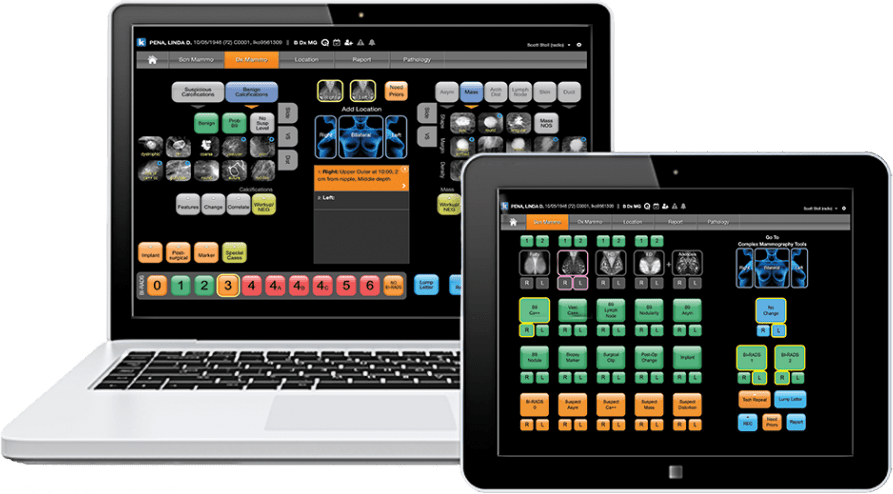
I contributed product design and front end work to structured finding entry, reporting and follow-up. The product connects a documented finding to its tracking record, recommendations and outreach, making the next stage part of the same workflow.
1DetectRecord opened
2RecommendProtocol set
3Reach outLetters sent
4ResolveClosed out
01 · DETECT
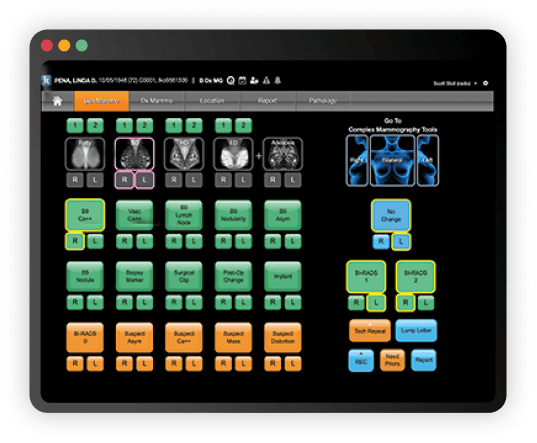
Structure finding entry at the point of documentation.
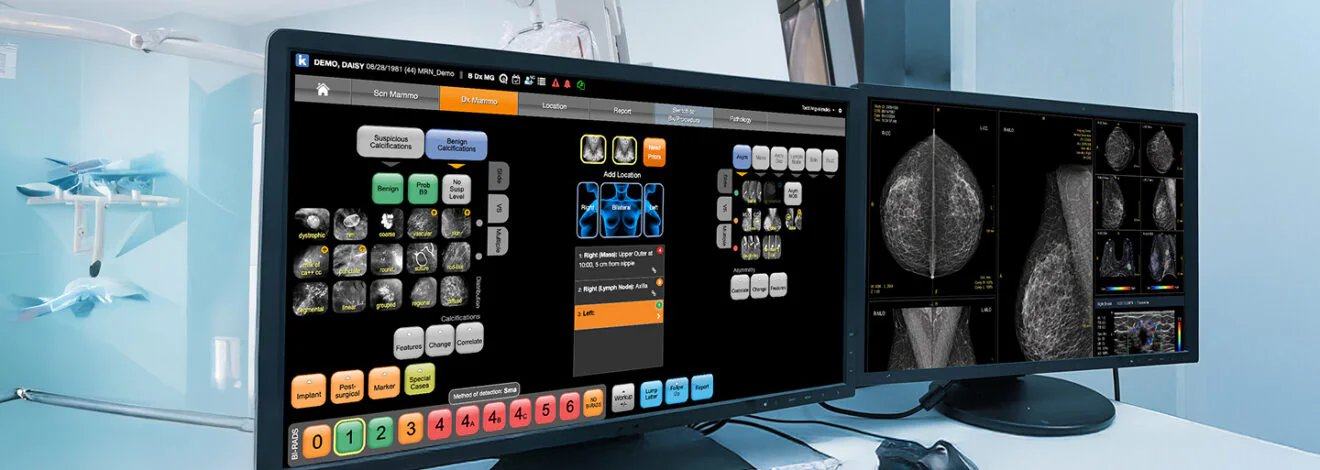
The interface supports touch entry of findings and creates a tracking record as part of reporting. Each lesion remains independently traceable.
✓No limit on findings per patient
✓Each lesion tracked independently
✓Complete audit trail from first detection
02 · REPORT
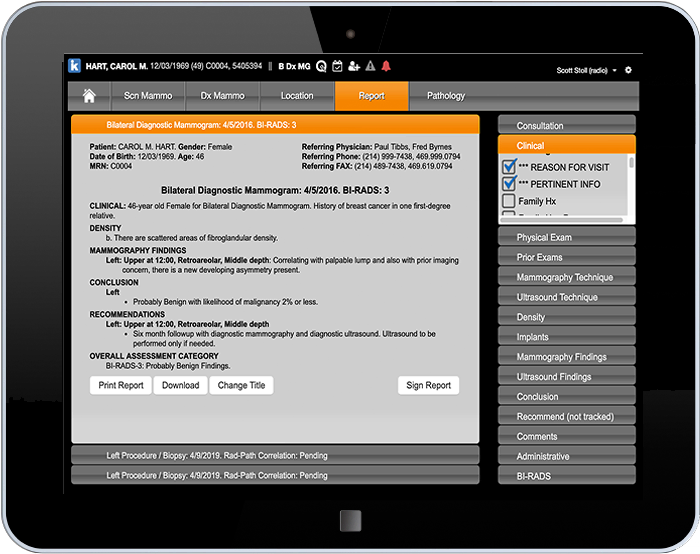
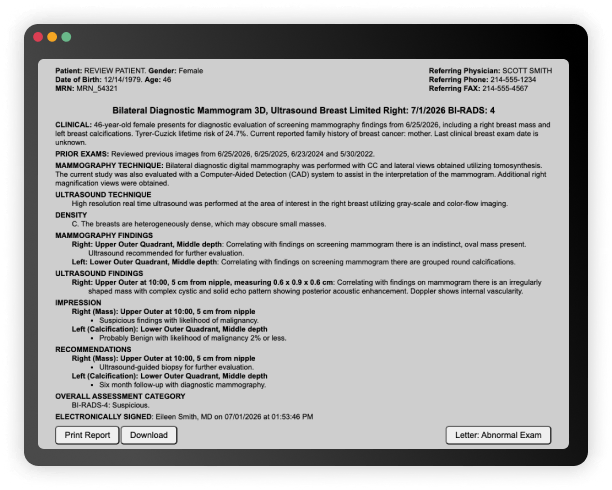
Carry structured findings into the report.
Structured entries support the report’s findings, impression, recommendations and assessment category. Integrated QA supports review before the radiologist signs.
✓Recommendations auto-populate
✓Prior findings carried to the next exam
✓Critical history never overlooked
03 · REACH OUT
Connect outreach to the documented result.
Result and reminder letters draw on the report and the practice’s protocols, with language preferences incorporated into the outreach workflow.
✓Letters built from the report itself
✓Multi-channel reminders
✓Patient-portal integration
04 · RESOLVE
Make unresolved follow-up visible.
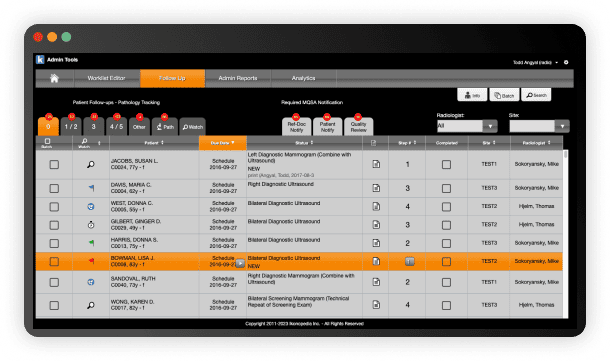
The follow-up manager brings open findings, overdue appointments and missing pathology into one view. Linking pathology to the specific lesion preserves context as the team works toward closure.
✓Overdue-appointment alerts
✓Missing-pathology flags
✓MQSA notification tracking
Designing for clinical judgment
Suggest a starting point. Preserve the radiologist’s decision.
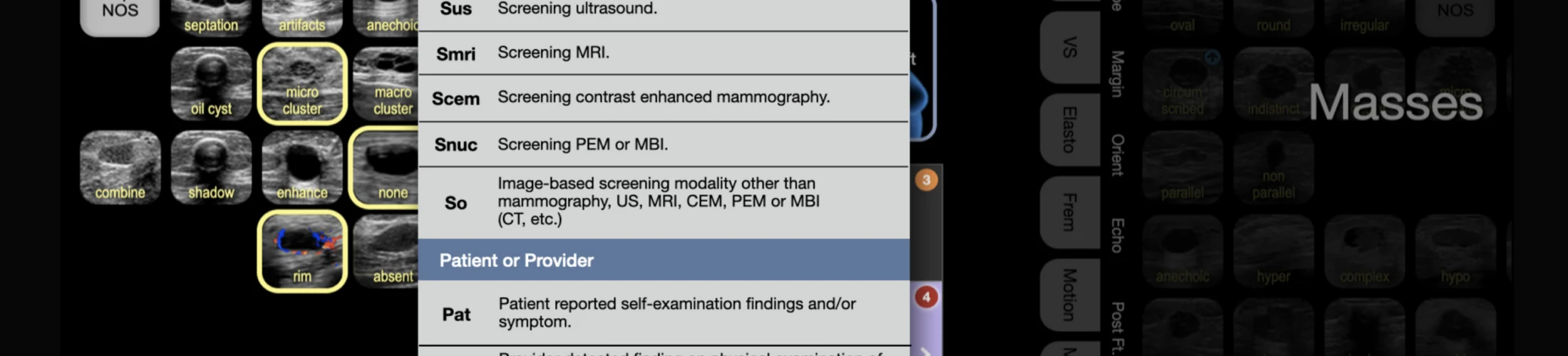
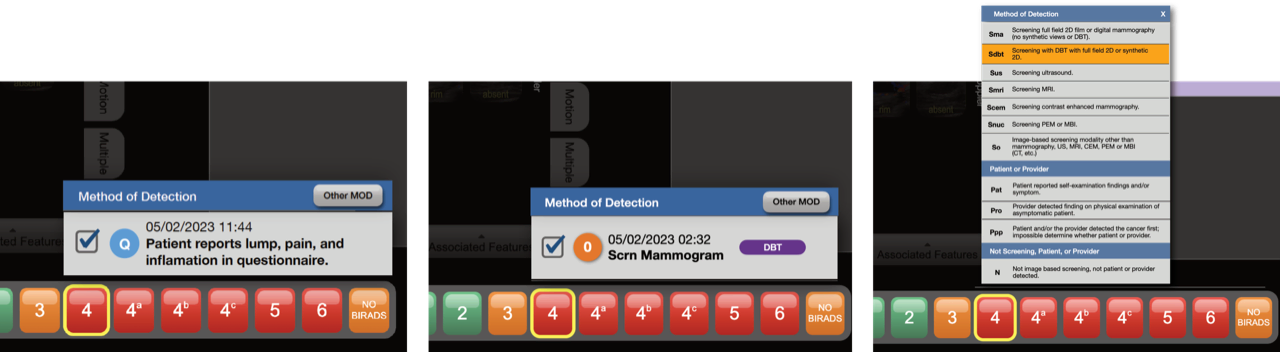
The Method of Detection interaction uses exam history and questionnaire responses to suggest the trigger for a work-up. The radiologist can accept the suggestion or select another option. I treated the suggestion as support for clinical judgment, with the choice kept visible and editable.
Relevant context
Bring prior exams and questionnaire information into the decision.
Clinician control
Make acceptance and an alternative selection explicit.
Structured documentation
Carry the selected trigger into the reporting workflow.
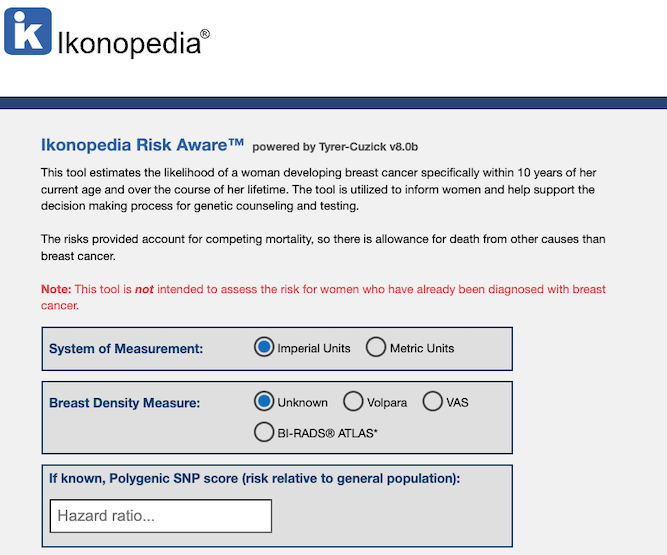
Risk Aware™
Bring the risk questionnaire into the connected workflow.
I contributed to the online Tyrer-Cuzick assessment experience, structuring patient history for entry through a tablet or portal. The responses support the risk calculation and carry into the reporting workflow, reducing the need to collect the same information again.
✓Patient history captured through tablet or portal
✓Structured responses support the risk assessment
✓History carries forward into the report
The consequential decisions
Three decisions that connect the clinical journey.
01
Make intake structured and answerable.
I designed the online questionnaire as data entry rather than a document to transcribe. The interaction needed to support questions patients could answer while preserving the structure required by the assessment.
02
Reuse information across the workflow.
I connected intake, assessment and reporting around the same structured responses. Removing a separate repeat entry step reduces duplicated work and the opportunity for transcription errors.
03
Make follow-up part of the product.
I treated finding entry, recommendations, outreach and resolution as connected stages. Open findings and missing follow-up information remain visible so the team can identify what needs attention.
One system, every surface
Keep the interaction language consistent across exam types.
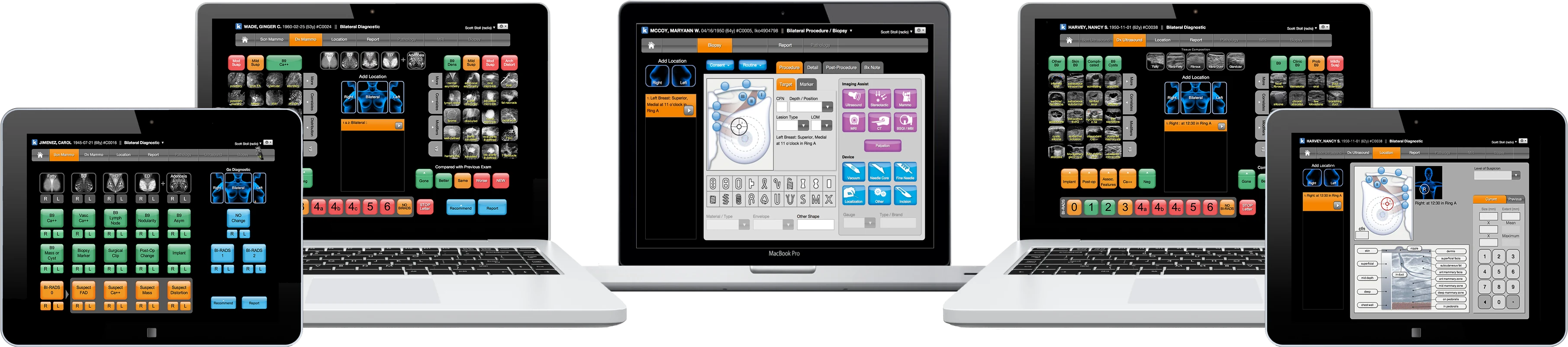
The interface designed for touch supports screening, diagnostic, biopsy and ultrasound workflows on laptop and tablet. Shared interaction patterns help preserve familiarity as the clinician changes task or device.
What the artifacts demonstrate.
The screens show structured finding entry, reporting, follow-up management, Method of Detection choices and the online risk questionnaire across devices. They demonstrate the workflow and my product design and front end contribution. The evidence here focuses on information architecture, workflow structure, and clinician usability scenarios, informed by our daily work with the radiologist who founded the company.
C.Price
MBA·PMP
UX/UI Design · Design Systems · Accessibility
© 2026 C.Price
Atlanta, GA (metro)